
Agricultural Extension and Rural sociology Department

Agricultural Extension and Rural sociology Department

Department Overview

The Department of Agricultural Extension and Rural Sociology aims to prepare graduates with a Bachelor’s degree in Agricultural Sciences who can plan and address economic, social, cultural, and health-related development needs. It seeks to equip students with the knowledge and technical skills required to meet evolving labor market demands and compete for suitable employment opportunities locally and internationally.
The Department emphasizes integrated development, community participation, positive attitude change, and field-based research addressing real-world needs. It also strives to support local communities through guidance, training, capacity building, improved performance, and practical solutions to the challenges faced by recent graduates, small-scale farmers, and investors by disseminating research findings relevant to their actual needs.

Department Vision

The Department of Agricultural Extension and Rural Sociology aims to prepare qualified agricultural graduates with the knowledge and technical skills needed to address economic, social, cultural, and health-related development challenges and compete in local and international labor markets.
The Department promotes integrated development, community participation, and field-based research. It also seeks to empower local communities through guidance, training, capacity building, and the dissemination of research findings to address the needs of recent graduates, small-scale farmers, and agricultural investors.

Department Mission

The Department of Agricultural Extension and Rural Sociology at the Faculty of Agriculture, Sohag University, aims to prepare qualified graduates with a Bachelor’s degree in Agricultural Sciences, equipped with the scientific knowledge and technical skills required to meet recognized academic standards and labor market needs.
The Department is committed to conducting applied scientific research, disseminating research findings that address real-world problems, and adhering to professional ethics. It also contributes to community service and environmental development in Upper Egypt through training, scientific guidance, participation in conferences and seminars, and providing research-based consultations to address community challenges.

Department Objectives

The Department of Agricultural Extension and Rural Sociology strives to achieve academic and institutional excellence at both local and international levels through the following objectives:

    • Conduct comprehensive field surveys to identify economic challenges facing rural communities in the region and surrounding areas.
    • Identify social development solutions and incorporate them into academic courses and research to prepare students and researchers for effective community development.
    • Strengthen agricultural extension through training for farmers and agricultural extension workers to promote modern agricultural practices and improve production efficiency.
    • Train qualified personnel to promote community participation and empower rural youth and women in various development activities.
    • Provide technical and scientific consultancy to farmers and agricultural investors, promote agricultural entrepreneurship, and strengthen cooperation between the University and the surrounding community to support sustainable development.

Head of Department’s Message

All praise is due to Allah, Lord of the Worlds, and may peace and blessings be upon our noble Prophet Muhammad, his family, and all his companions.

It is my great pleasure to extend my sincere congratulations to the students of the Economic and Social Sciences Program, who represent a cornerstone of Egypt’s agricultural economy. Their role involves transferring agricultural information and scientific knowledge into practical applications, working across various agricultural fields, and utilizing modern information and communication technologies.

They also contribute to advancing e-agricultural extension in line with contemporary needs, modernizing the agricultural sector, enhancing farmers’ practical and technical skills, improving living standards, and increasing agricultural productivity. These efforts ultimately promote sustainable development and strengthen the economy of our beloved Egypt.

May Allah grant us success.

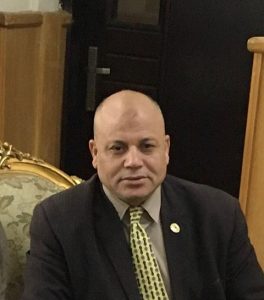
Prof. Dr. Mansour Ahmed Mohamed Hefny
Professor and Head of Department
 

Department Staff


No.NamePositionSpecialization
1Prof. Dr. Mansour Ahmed Mohamed HefnyProfessor of Agricultural Extension and Head of DepartmentAgricultural Extension
2Prof. Dr. Abdel Moneim Mohamed Abdel RahmanProfessor of Agricultural Extension and Vice Dean for Community Service and Environmental DevelopmentAgricultural Extension
3Dr. Mohamed Abdel Latif OrabiLecturerRural Sociology
4Israa Abou El-Fadl AliAssistant Lecturer—
5Latifa Mohamed AbdellahAssistant Lecturer—
6Amani Abdel Hakim Abdel Aal AhmedDemonstrator—

Postgraduate Studies

The Department awards a Professional Master’s Degree in Agricultural Extension, a Research Master’s Degree in Agricultural Extension and Rural Sociology, and a Ph.D. in Agricultural Extension and Rural Sociology.
During the 2019–2020 academic year, four students obtained the Professional Master’s Degree in Agricultural Extension, ten students obtained the Research Master’s Degree in Agricultural Extension, and three students obtained the Research Master’s Degree in Rural Sociology.
In the same academic year, four students were registered for the Ph.D. in Agricultural Extension, six students were registered for the Master’s Degree in Agricultural Extension, and two students were registered for the Master’s Degree in Rural Sociology.

Undergraduate Studies

  1. Agricultural Extension and Rural Sociology Specialization: Five students were enrolled in the final year of the Bachelor’s degree program during the 2019–2020 academic year.

  2. Economic and Social Sciences Program: Forty-five students were enrolled in Level 2.

Research Plan

  • ICT in Environmental Awareness and Agricultural Extension.

  • Agricultural Extension Agents’ Attitudes Toward ICT.

  • Challenges Facing Agricultural Extension Systems.

  • Agricultural Extension and Sustainable Development.

  • Impact of Agricultural Media on Farmers.

  • Water Conservation and Management.

  • Digital and Mobile Agricultural Extension.

  • Modern Extension Methods and Agricultural Development.

  • Agricultural Extension in the Context of Climate Change.

  • Digital Technologies in Agriculture.

  • Agricultural Innovations and Knowledge Dissemination.

  • Electronic Information Sources.

  • Environmental Risks.

  • Innovative Agricultural Research Dissemination.

  • Farmer Networks and Field Schools.

  • The Role of Small Projects in Rural Development.

  • Development Barriers and Their Impact on Community Participation.

  • The Role of NGOs in Rural Community Development.

  • Rural Communities and Sustainable Development.

  • Social Barriers to Women’s Participation in Development.

  • Family and Social Impacts of Women’s Employment.

  • Urbanization and Changing Family Roles.

  • Divorce: Causes and Consequences.

  • Verbal Domestic Violence.

  • Working Women and Family Relationships.

Scroll to top